
Why Is Fertilizer Production Important for Global Buyers?
Global buyers rarely purchase fertilizer on price alone. They also depend on steady supply, consistent product quality, and delivery dates that match planting seasons. Fertilizer production shapes all three. It determines how raw materials become usable nutrients, where products can be made, and how much energy and transport they require. Nitrogen fertilizers commonly rely on ammonia, whose production can be energy-intensive. Phosphate products use mined rock, while potash comes from mineral deposits. Different inputs create different supply risks. Small details matter. A delayed shipment can disrupt a distributor’s plans, and a change in nutrient concentration may require adjustments to application rates.
Understanding fertilizer production helps buyers assess suppliers beyond a quotation sheet. They can compare product specifications, manufacturing locations, available capacity, and the supplier’s ability to explain quality controls. But factory capacity does not guarantee an on-time delivery. Energy prices, maintenance, weather, and port congestion can all affect availability. No forecast is perfect. Buyers should verify technical documents and ask clear questions about sourcing, lead times, and batch consistency. Certifications and test results can support a supplier’s claims, though paperwork alone is not proof of dependable performance. The picture is sometimes less tidy than procurement teams would like. A supplier may offer competitive pricing but limited flexibility when demand changes. For global buyers, informed sourcing means weighing cost against reliability, product suitability, and logistics. That makes fertilizer production a practical purchasing concern, not merely a factory-side issue.
What Fertilizer Production Involves
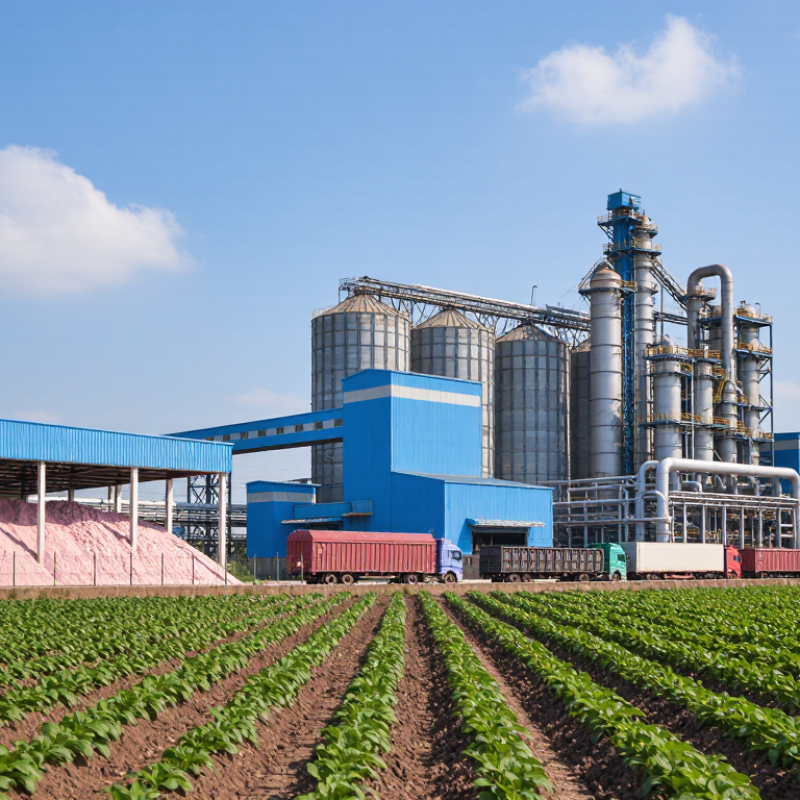
Fertilizer production begins with raw materials, but the route depends on the nutrients required. Nitrogen fertilizers commonly use ammonia made from nitrogen and hydrogen. Phosphate products start with phosphate rock, which is processed into usable compounds. Potash fertilizers are produced from potassium-bearing minerals. Feedstock quality can vary, so plants adjust process settings and test materials along the way.
The materials may be reacted, concentrated, dried, or blended before granulation forms consistent particles. Operators monitor temperature, moisture, particle size, and nutrient content. Small details matter. A damp batch can cake during storage, while uneven granules may spread poorly in a field. Quality checks help buyers compare declared nutrient levels with laboratory results, though testing methods and tolerances can differ between suppliers.
Production also involves treating process water, controlling dust, and managing energy use. These steps affect operating costs and the environmental footprint, not just factory appearance. Finished fertilizer is screened, cooled, and packed or loaded in bulk for shipment. Even a well-designed line can struggle when feedstock quality shifts; that risk is easy to underestimate. Buyers often need clear specifications for nutrient content, moisture, particle size, and packaging before cargo is dispatched.
Why Is Fertilizer Production Important for Global Buyers?
What fertilizer production involves: Ammonia is made from nitrogen and hydrogen, with hydrogen commonly obtained from natural gas or coal. Ammonia is then used to make nitrogen fertilizers; phosphate and potash fertilizers rely on mined mineral resources and further processing.
Natural gas is the main feedstock for ammonia production, while coal supplies much of the remainder. This matters to buyers because feedstock availability and energy costs can affect fertilizer supply and prices. Shares are approximate. Source: International Energy Agency, Ammonia Technology Roadmap (2021).
How Fertilizer Production Supports Crop Yields and Food Supply
Fertilizer production helps make essential plant nutrients available in dependable quantities. Crops need nitrogen, phosphorus, and potassium, though their needs vary by species, soil, and growth stage. When nutrient supply is inadequate, plants may develop slowly or produce fewer grains, fruits, or roots. Small differences matter. A field with pale leaves or uneven growth can reflect several causes, so fertilizer alone is not a reliable diagnosis.
For buyers, consistent production supports planning across planting seasons. Farmers and distributors need products available near the time fields are prepared, not weeks after a nutrient shortage appears. A wheat grower, for example, may apply nitrogen in split applications to support early growth and later grain development. The right rate depends on local conditions. Soil tests, crop records, and advice from qualified agronomists help guide decisions and reduce unnecessary application.
Fertilizer production also affects the wider food supply by helping farms maintain more predictable harvests. Yet output cannot solve every challenge. Drought, poor storage, transport delays, and declining soil health can still limit yields. More fertilizer is not always better; excess nutrients can be wasted or move beyond the root zone. The uncomfortable part is that supply reliability and careful use must go together, and buyers do not always have perfect information about either.
How Production Capacity Affects Global Supply and Prices
Why Is Fertilizer Production Important for Global Buyers?
How Production Capacity Affects Global Supply and Prices
Production capacity sets the ceiling for how much fertilizer can reach buyers, but nameplate capacity is not the same as steady output. The U.S. Geological Survey’s Mineral Commodity Summaries 2025 estimates global ammonia capacity at about 190 million metric tons per year, against 2024 production of roughly 150 million tons. That gap matters. Plants may be offline for maintenance, lack affordable natural gas, or face transport bottlenecks. A large capacity figure cannot guarantee prompt deliveries.
When production tightens in major supply regions, buyers may compete for fewer export cargoes. Importers can then face longer lead times, higher freight costs, and sharper price swings, even when global capacity looks ample. The International Energy Agency notes that ammonia production is energy-intensive, so changes in natural-gas costs can quickly affect producers’ operating decisions. A plant may exist but remain uneconomic to run. That distinction is easy to overlook.
For procurement teams, supplier capacity should be checked alongside actual operating rates, inventory, and port access. Regional production also matters: capacity far from a buyer’s market may not help if shipping routes are congested. USGS figures provide a useful global benchmark, but they do not show every plant’s availability or each fertilizer grade’s supply. Buyers should treat capacity as a signal, not a promise.
Why Quality and Sustainability Standards Matter to Buyers
For global fertilizer buyers, quality is more than the nutrient percentage printed on a bag. Consistent nutrient content, moisture levels, granule size, and clear batch records affect storage, spreading, and crop response. Ask suppliers for recent independent test results and traceability documents. A certificate alone is not enough; check that its batch matches the shipment. Small gaps matter.
Sustainability deserves the same scrutiny. The International Energy Agency’s Ammonia Technology Roadmap reports that ammonia production uses about 2% of global final energy and causes roughly 1.3% of energy-related CO₂ emissions. Buyers can request verified product carbon footprints, energy-use data, and evidence of environmental management. Compare figures using the same boundaries and methods. Otherwise, a “lower-carbon” claim may be hard to interpret. I would not treat a polished report as proof without checking its scope and verification.
Tips: Before contracting, compare a retained sample with delivery specifications, confirm testing methods, and record how each shipment is stored. Ask for emissions data per tonne of product, not just broad company targets. Then check whether the reported figure covers production, transport, or both.
Why Is Fertilizer Production Important for Global Buyers? - Why Quality and Sustainability Standards Matter to Buyers
| Buyer consideration | Typical data or reference | Why it matters in global sourcing | What buyers should verify |
|---|---|---|---|
| Urea nutrient content | Common declared grade: 46-0-0 (N–P₂O₅–K₂O) | A widely traded nitrogen fertilizer; consistent nutrient content helps buyers compare delivered nutrient value and plan application rates. | Certificate of analysis, nitrogen assay, moisture, biuret where relevant, and conformity with the purchase specification. |
| DAP nutrient content | Common declared grade: 18-46-0 (N–P₂O₅–K₂O) | Supplies both nitrogen and phosphate, so reliable composition supports crop nutrition planning and reduces the risk of under- or over-application. | Declared nitrogen and available phosphate, moisture, particle-size distribution, and shipment-to-shipment consistency. |
| MAP nutrient content | Common declared grade: 11-52-0 (N–P₂O₅–K₂O) | Provides nitrogen and a high proportion of phosphate; grade accuracy matters when buyers balance fertilizer blends or meet crop-specific nutrient plans. | Nutrient analysis, water-soluble phosphate where specified, moisture, granule condition, and applicable local labeling rules. |
| MOP (potash) nutrient content | Common declared grade: 0-0-60 (K₂O equivalent) | Potassium is an essential plant nutrient. Buyers need a dependable grade to calculate blend composition and meet agricultural demand. | Water-soluble potash, chloride or other contract-relevant specifications, moisture, particle size, and product identity. |
| Physical quality and handling | Common checks include particle-size distribution, moisture, caking, dust, and granule strength; acceptable limits are product- and contract-specific. | Poor physical condition can cause storage losses, handling problems, uneven spreading, and delays at ports or distribution facilities. | Agreed test methods and tolerances, representative sampling, pre-shipment inspection, packaging condition, and storage recommendations. |
| Contaminants and product safety | Limits depend on fertilizer type, destination-market rules, and the contract; there is no single universal limit applicable to every product and market. | Compliance protects farm soils, food systems, workers, and market access, while helping buyers manage regulatory and reputational risk. | Relevant laboratory results, safety data sheet, traceability documents, and compliance with applicable destination-market requirements. |
| Production emissions and sustainability | Emissions vary by product, feedstock, energy source, production technology, and calculation boundary; a comparable product carbon footprint should state its methodology and scope. | Fertilizer production can be energy-intensive. Transparent environmental data helps buyers assess supply-chain impacts and compare suppliers on a consistent basis. | Product-level footprint data, boundary and reporting period, energy and emissions methodology, and supporting evidence or independent assurance where required. |
| Quality and environmental management | ISO 9001 addresses quality management systems; ISO 14001 addresses environmental management systems. | Management systems can support consistent processes and environmental controls, but do not by themselves certify a fertilizer’s nutrient grade or product footprint. | Check certificate scope, validity, issuing body, facility coverage, and separate product-specific test results. |
Note: Fertilizer grades are conventionally expressed as percentages of nitrogen (N), phosphate as P₂O₅, and potash as K₂O. The grades shown are common examples, not guarantees for every product; buyers should confirm the applicable specification, test method, and destination-market requirements.
What Global Buyers Assess When Selecting Fertilizer Suppliers
Global buyers assess more than a quoted price. They examine whether a supplier can deliver consistent nutrient grades, reliable volumes, and clear quality records. The International Fertilizer Association’s Medium-Term Fertilizer Outlook 2024–2028 projects global fertilizer demand reaching about 205 million tonnes of nutrients by 2028. That scale makes production capacity and dependable shipment schedules practical concerns, not paperwork details. Ask for recent batch analyses and production-capacity information. Check whether specifications match the intended crop and application method. Small differences matter.
Production resilience also deserves scrutiny. The International Energy Agency reports that ammonia production uses about 2% of global final energy and causes roughly 1.3% of energy-system carbon dioxide emissions. Buyers can therefore ask how a producer manages energy exposure, maintenance, and interruptions to key inputs. Those answers may help explain price stability and supply risks. Review lead times, packaging, storage needs, and transport options alongside the product specification. Traceable quality records help buyers investigate a shipment that behaves differently in the field. A low price can still cost more if delivery slips or product consistency varies. Supplier claims are useful, but independent test results and a clear process for handling quality complaints offer firmer ground. Not perfect, of course. Conditions change, and a polished audit cannot predict every disruption.
Related Posts
-
2026 Top Insights into Fertilizer Factory Innovations and Trends
-
Top 10 Green Fertilizer Options for Sustainable Farming?
-
How to Optimize Southern Petrochemical Processes for Maximum Efficiency in 2025
-

Best Fertilizer Prices for Global Buyers in 2026?
-
Top 10 Organic Fertilizer Companies for Global Buyers?
-
Top 10 Urea Suppliers: Key Factors to Consider for Your Sourcing Needs