How to Improve Fertilizer Application for Crop Growth?
Improving fertilizer application is no longer about spreading more granules across every hectare. It is about matching nutrients with crop demand, soil conditions, weather, and yield goals. The Food and Agriculture Organization reports that global fertilizer use has continued rising, while nutrient losses remain a major environmental and economic concern. The International Fertilizer Association projects global fertilizer demand will exceed 200 million tonnes of nutrients annually during the coming years. More fertilizer does not guarantee more grain.
“Precision agriculture is about doing the right thing, at the right place, at the right time,” says Dr. Raj Khosla, a recognized precision-agriculture researcher. His principle supports the 4R framework: the right source, rate, time, and place. In practice, that may mean testing soil before planting, applying nitrogen beside active roots, and delaying application before heavy rain. A calibrated spreader also matters. A small error across 100 hectares becomes expensive quickly.
The United Nations Environment Programme warns that excess nitrogen contributes to air and water pollution. The World Resources Institute also identifies nutrient efficiency as an important pathway for reducing agriculture’s environmental pressure. These findings make fertilizer application a management decision, not a routine pass across the field.
Still, no single prescription fits every farm. Soil maps can be incomplete. Weather can overturn a careful plan. Farmers should compare application records with tissue tests, yield maps, and profit per hectare. That comparison may reveal uncomfortable mistakes. It may also show that the cheapest input was not the most effective one.
Assess Crop Nutrient Needs and Soil Fertility
Improving fertilizer application begins with measuring the field, not guessing the rate. A representative soil test should check pH, organic matter, nitrate, available phosphorus, potassium, and key micronutrients. Sample separate areas with different slopes, colors, or past crops. A single sample can mislead me, especially after uneven manure spreading or heavy rainfall.
The FAO’s World Food and Agriculture Statistical Yearbook 2023 reported global fertilizer use of about 185 million tonnes of nutrients in 2021. That volume shows why efficiency matters. Match applications to crop removal, realistic yield targets, and existing soil reserves. For example, a high-phosphorus soil may need little additional phosphorus, while sandy soil may require smaller, split nitrogen applications. Use local soil-test calibration data whenever possible.
Timing and placement also deserve field-level attention. Apply nutrients near active roots, but avoid spreading before intense rain. The 4R Nutrient Stewardship framework recommends the right source, rate, time, and place. In practice, a grower might divide nitrogen between planting and early growth, then inspect leaves and soil moisture before adjusting. This approach is not perfect. Weather can overturn a careful plan. Keep yield maps, test results, application dates, and crop observations together. After harvest, compare nutrient inputs with grain or biomass removal, then revise the next season’s plan.
Select the Right Fertilizer for Each Crop
Choosing the right fertilizer begins with the crop’s needs, not a colorful bag. A soil test reveals pH, organic matter, and available nutrients. In field checks, I compare these results with the crop’s expected nutrient removal. Leafy vegetables often need steady nitrogen for leaf production. Fruit crops may require more potassium during flowering and fruit filling. The label must match.
Use a complete fertilizer only when the soil lacks several nutrients. A high-nitrogen product can create dark leaves but weak stems and delayed fruiting. For phosphorus, avoid routine applications when tests already show sufficient levels. Calcium and magnesium also depend on soil pH and root conditions. Water-soluble fertilizers act quickly, while controlled-release materials feed more slowly. Neither is automatically better.
I once applied too much nitrogen before a rainy period. The crop grew rapidly, but lodging increased and some nutrients washed beyond the root zone. That mistake changed my practice. Now, I divide nitrogen into smaller applications and adjust them to crop stage, weather, and irrigation. Check water quality too, because salts or high alkalinity can affect nutrient availability. Follow local soil-test recommendations, wear suitable protective equipment, and keep application records. Small notes about leaf color, growth rate, and rainfall often reveal more than memory.
Apply Fertilizer Using Efficient Field Methods
Improving fertilizer application starts with efficient field methods, not a fuller spreader. Divide fields by soil texture, slope, and yield history. Collect 15–20 cores from each management zone, then test them before planting. The FAO’s World Food and Agriculture Statistical Yearbook 2024 reports global inorganic fertilizer use at about 185 million tonnes of nutrients in 2022. That figure makes precise placement more important, especially where nutrients can move into waterways. Use the 4R framework: the right source, rate, time, and place. Small details matter.
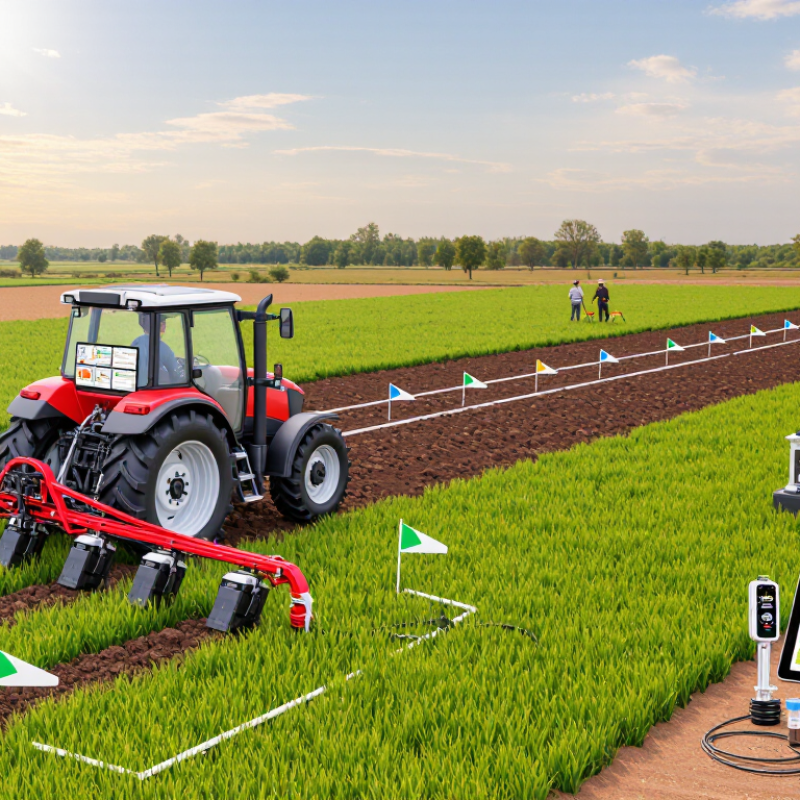
Variable-rate application can match nutrients to crop demand. USDA Economic Research Service reports that GPS guidance has reached roughly half of surveyed U.S. corn and soybean acreage. Guidance reduces overlaps and missed strips, but it cannot correct poor soil data. Calibrate spreaders before each season. Check the actual output from every outlet. For nitrogen, split applications often perform better than one heavy dose. Apply part before rapid crop uptake, then adjust the next pass after rainfall and crop scouting. Banding phosphorus near the root zone may improve access in cool soils.
Keep untreated check strips in representative areas. They reveal whether an expensive adjustment actually helped. Record application rate, soil moisture, wind speed, and yield. Avoid spreading before intense rain. A perfect plan is unlikely. A bad sample can defeat a good algorithm, and equipment settings may drift during a long day. Review the records after harvest, then revise the next field map.
Monitor Crop Growth and Adjust Fertilizer Practices
Improving fertilizer application begins with watching the crop, not guessing from the calendar. Walk the field every few days and inspect leaf color, plant height, stem strength, and root development. Look closely. Uneven growth may indicate poor soil conditions, drainage problems, pests, or uneven fertilizer distribution.
Record observations by field section, growth stage, rainfall, and application rate. Soil testing before planting provides a useful nutrient baseline, while tissue testing can reveal hidden deficiencies during active growth. A pale lower leaf may suggest nitrogen shortage, but similar symptoms can follow waterlogged soil. This is where professional interpretation matters. Compare test results with crop needs and local agronomic guidance before changing the program.
Adjust fertilizer carefully and in small steps. If plants are growing slowly but soil moisture is adequate, a split application may support recovery better than one heavy dose. Stop or reduce nitrogen when foliage becomes excessively dark, soft, or unusually tall. Excess fertilizer can delay maturity and increase nutrient loss after rain. Keep records. They expose mistakes.
One practical weakness is relying too heavily on visual judgment. I have seen healthy-looking leaves hide low nutrient reserves, while stressed plants received fertilizer they could not use. Recheck the field after adjustment, preferably within several days. If growth remains uneven, investigate roots, compaction, and irrigation instead of adding more nutrients. Good decisions come from repeated measurements, not a single impressive-looking plant.
How to Improve Fertilizer Application for Crop Growth?
Monitor crop growth and adjust fertilizer practices according to crop demand, soil-test results, and weather conditions. The chart shows how increasing nitrogen application can improve relative yield until the crop approaches its economically optimal rate.
Practical guidance: Split nitrogen applications when possible, check crop color and growth regularly, and avoid applying more fertilizer after yield response levels off. Actual rates should be adjusted for crop type, soil fertility, yield target, and local recommendations.